
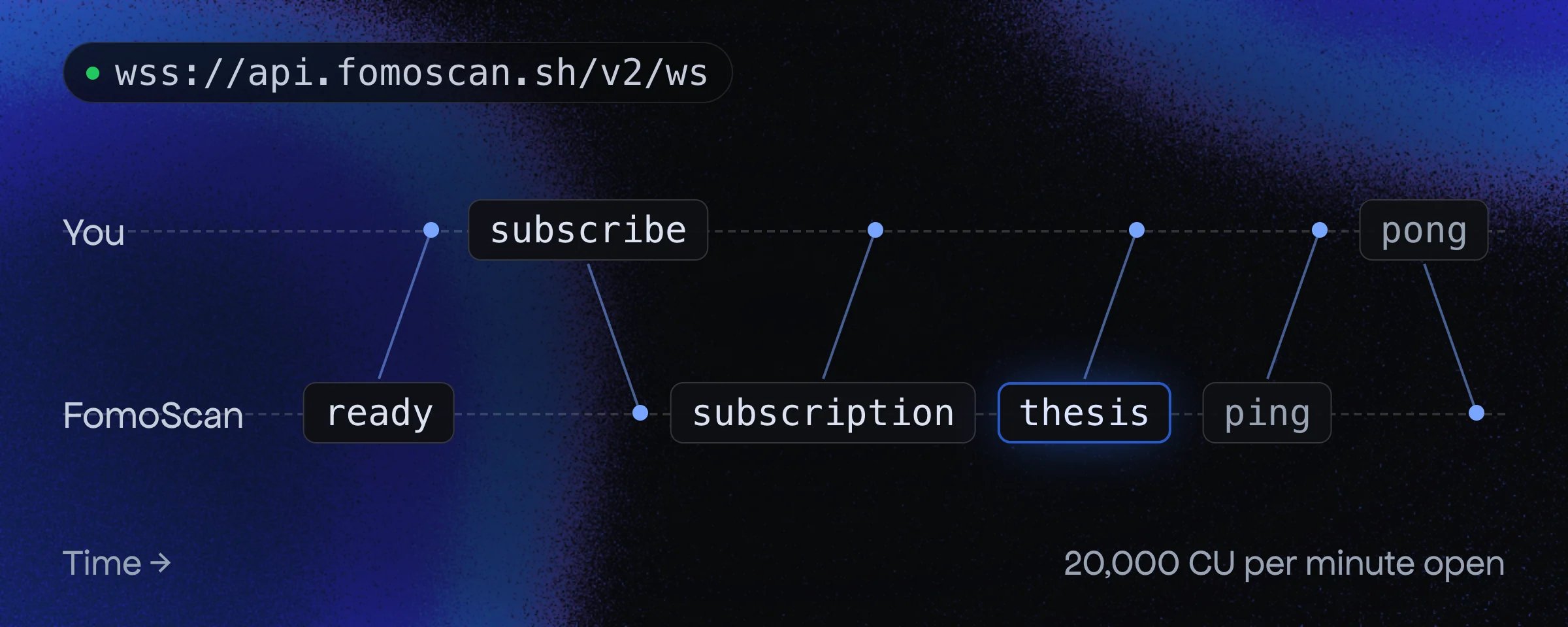
Sockets are included from the Growth plan. Keys on legacy plans keep the
access they have. Other keys are refused on the handshake with
403 WEBSOCKET_PLAN_REQUIRED.Connect and subscribe
Authenticate with the sameAuthorization header as REST. You attach
unsubscribed and receive nothing until you send a subscribe frame naming every
token or up to 50 token addresses:
subscribe replaces the current one,
so you can change it without reconnecting. Send { "type": "unsubscribe" } to
stop receiving. A tokens list cannot be empty.
Feeds
Thesis feed
/v2/ws: trader theses, every token or up to 50.pump.fun feed
/v2/ws/pump: new pump.fun callouts.ready on attach, subscription after every accepted frame,
replaced when a subscribe tore down an earlier subscription, and error for
a rejected frame. A rejected frame does not close the socket or change your
subscription. The full frame list is in the
API reference under WebSocket.
Before you build on it
- Hold the socket on your backend. The browser
WebSocketconstructor cannot set headers. Relay to your front end. - There is no replay. Take a snapshot from the REST wall on connect and
reconcile on
thesisHash(idfor pump callouts). After a drop, fetch the newest page to close the gap, then reattach and resubscribe. - Answer pings. We ping on a fixed interval and close with
1011a socket we have not heard from for three ping intervals. A pong or any frame you send counts. Browser and Nodewsclients reply on their own; a hand-rolled client must reply itself. - Read as fast as frames arrive. A socket that falls too far behind is
closed with
1013.
Close codes
A refusal before the upgrade is an HTTP status, not a close code:
401 for a
bad key, 402 QUOTA_EXCEEDED when the key cannot pay for the first minute, and
403 for a plan or scope that does not include sockets.
Each socket is billed per minute held open, on its own, from the same credits as
REST calls. The first minute is charged when the socket opens. One token or
every token costs the same.